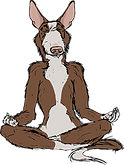


Finding Your Dog’s Off Switch: Why “Calm” Has to Be Taught
One of the most common concerns I hear from dog owners — especially those with high-drive working breeds — is that their dog just never seems to calm down. Even after a long walk, a trip to the dog park, or a full day of fetch, the dog comes home and immediately grabs a toy, whining or pacing or begging for more stimulation.
Sound familiar?
You might be thinking your dog needs more exercise, but the truth is — that kind of hyperactivity isn’t about physical energy. It’s about arousal, overstimulation, and a lack of regulation.
Let’s talk about what’s really going on when your dog doesn’t have an “off switch”… and what to do about it.

Chronic Overstimulation Is Not “High Energy”
Here’s the reality: what most people label as a “hyper” dog is often just a dog that’s chronically overstimulated.
Many dogs — especially those bred for jobs like herding, retrieving, or protection — have incredibly sensitive nervous systems. They react quickly to sound, movement, light, and energy in their environment. This was by design — we bred dogs to be hyper-aware, responsive, and driven.
But now, most of these dogs are living in small homes and suburban backyards with no outlet for the kind of mental work they were bred for. So instead, they attach that working drive to anything that moves — squirrels, kids, cars, shadows, lights, or a ball.
When owners see that their dog is still “crazy” after an hour-long walk or a game of fetch, they assume the answer is more stimulation. But more often than not, the exact opposite is true.
What your dog needs is less stimulation — and better structure.
Dogs Can Become Addicted to Arousal
A lot of people don’t realize that dogs can become addicted to arousal the same way we become addicted to dopamine. Every time your dog chases a ball, runs laps, or barks at the neighbor’s cat, their brain is getting a chemical hit. And like any addiction, the more they get, the more they crave.
So when your dog comes home from a hike and immediately grabs a toy for you to throw, it’s not because they’re not tired. It’s because they’re chasing the feeling they just had — that rush of dopamine, adrenaline, and stimulation.
And if you keep feeding that cycle with more activity, you’ll end up with a dog that:
Can’t settle down
Whines or paces constantly
Obsessively fixates on toys or movement
Becomes reactive to sound or motion
In some cases, these patterns even escalate into full-blown compulsive behaviors. Dogs who are constantly scanning, chasing shadows, or spinning in circles aren’t “just high energy” — they’re dysregulated.
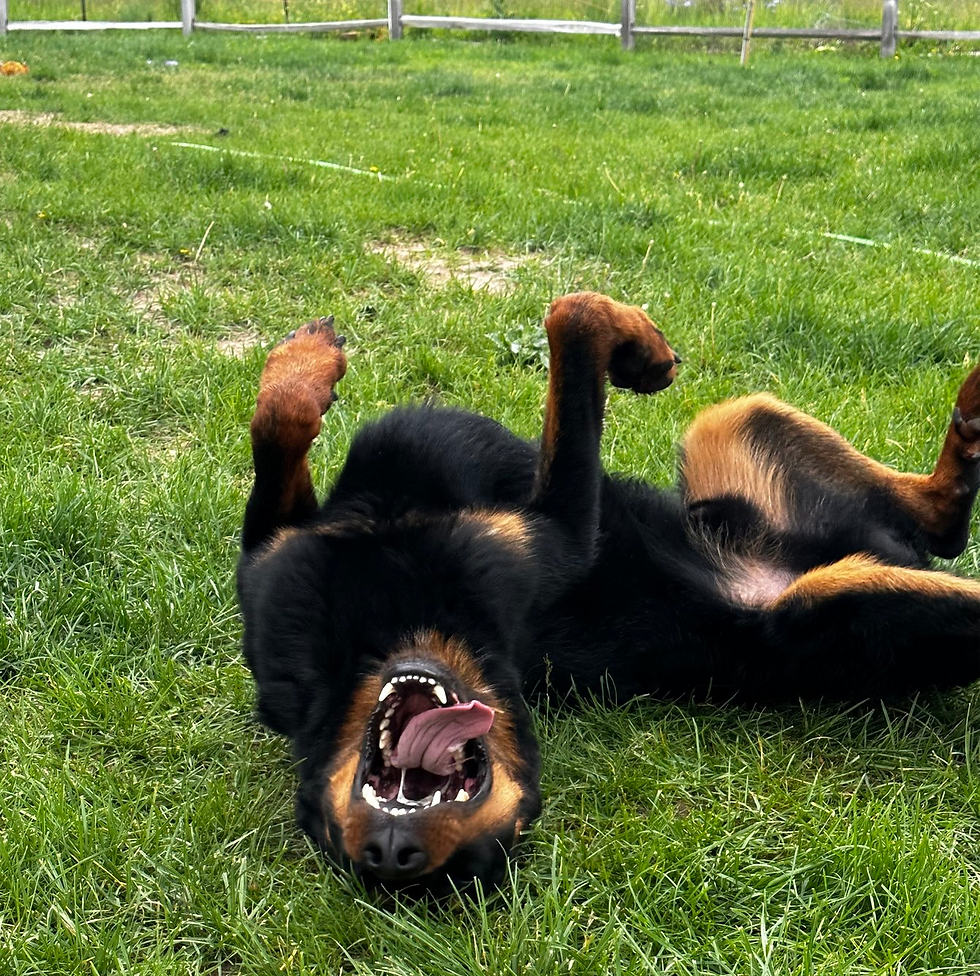
How to Break the Arousal Cycle
Teaching your dog to turn off doesn’t happen overnight, but it can be done — and it starts with training.
The goal is to teach your dog that calm is rewarding. This means building impulse control, teaching neutrality, and creating routines that make rest predictable and expected.
Some of the tools we use at Zen Dog Training include:
Place training (go to bed, stay on your mat)
“Sit on the Dog” (yes, it’s a real thing — and it works. Check out the original article here)
Calm leash walking with frequent decompression breaks
Down-stay with duration in real-world environments
If your dog can’t lay down and stay down, or can’t stop barking when you ask, or can’t leave a toy alone when you’re done playing — you don’t have an energy problem. You have a leadership and regulation problem.
Routines Matter — Dogs Thrive on Structure
One of the most powerful things you can do to help your dog calm down is to establish predictable “up” and “down” times in your day.
That means:
Walks happen at roughly the same times each day
Play happens when you initiate it — not when your dog demands it
Rest is scheduled and expected, with no stimulation
Your dog knows what’s coming next, so they’re not constantly in a state of anticipation
When your dog has a routine, their brain can finally let go. Without it, they stay on edge — always watching, always waiting, always ready to go.
And here’s the kicker: if you’re still throwing the ball after your walk, or winding them up at night when you want them to settle… you’re feeding the exact habit you’re trying to break.

Stress Makes It Worse
Some dogs struggle to settle because they’re carrying a heavy load of stress or sensory overwhelm — especially rescue dogs or those with a history of trauma. These dogs may also be more reactive, more phobic, or more likely to develop obsessive behaviors.
When I work with dogs like this, I often recommend a Sensory Detox period: no high-arousal activities, no ball chasing, no high-stress outings, and a lot of calm, neutral exposure to the world. We rewire the dog’s baseline, teach them to self-soothe, and start building a foundation of calm.

Final Thoughts
If your dog doesn’t have an off switch, don’t just reach for the leash or ball and try to “wear them out.” That might give you 20 minutes of relief — but it won’t fix the real problem.
Instead, teach them how to rest. Show them that calm is safe, that boredom is okay, and that they don’t need to chase every stimulation in their environment.
This is how you raise a well-balanced, go-anywhere, do-anything dog.
If you’re struggling with an overstimulated, anxious, or high-drive dog — reach out. We’ve helped hundreds of families build calm, confident companions, and we can help you too.
📍 Serving Northwest Arkansas
📞 Call or text us to schedule a free consult
📧 Or message us at @zendognwa
🌐 Visit our website to learn more about our private programs, service dog training, and adventure-ready dogs


Comments